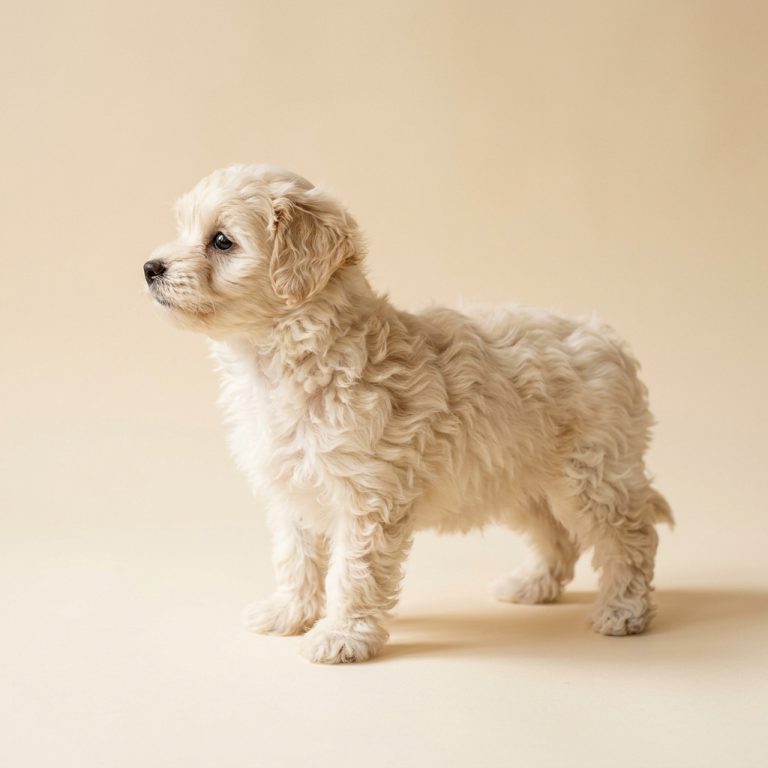
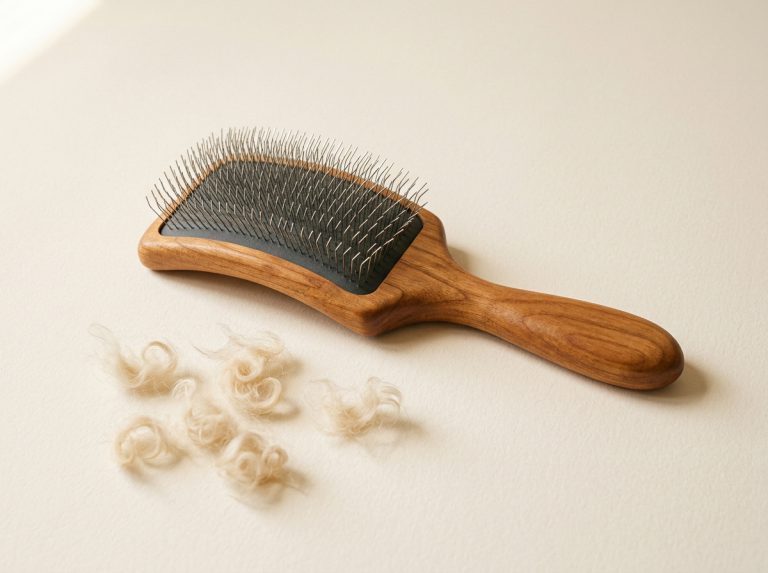
Breed-specific guides, tool breakdowns and honest bath schedules from the groomers who run our Porto studio. No affiliate fluff, no generic "brush your dog" advice — just what actually works on tight, fluffy coats.
The "every 4–6 weeks" rule you’ll find everywhere was written for Labrador-density coats. Cavapoo curl porosity changes the equation — and bathing too often is the single most common reason coats start to mat faster, not slower.
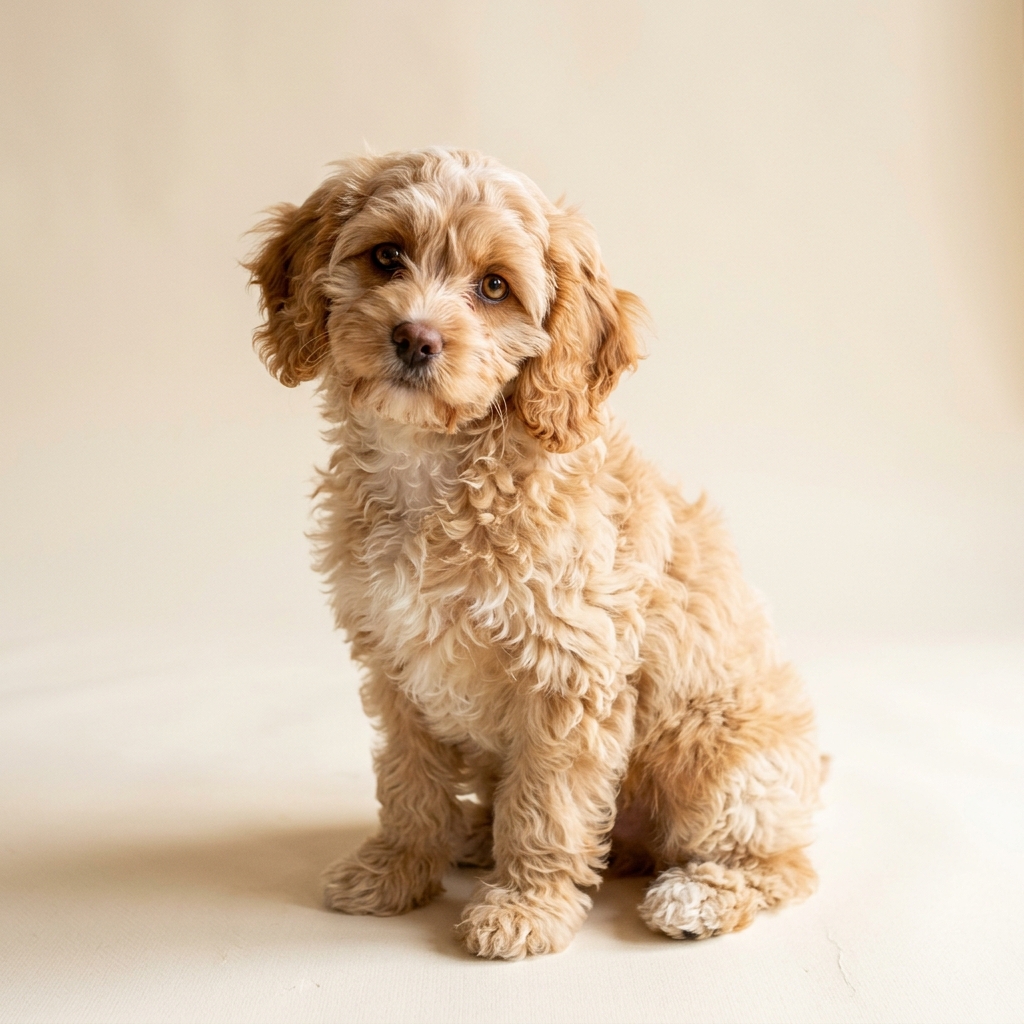
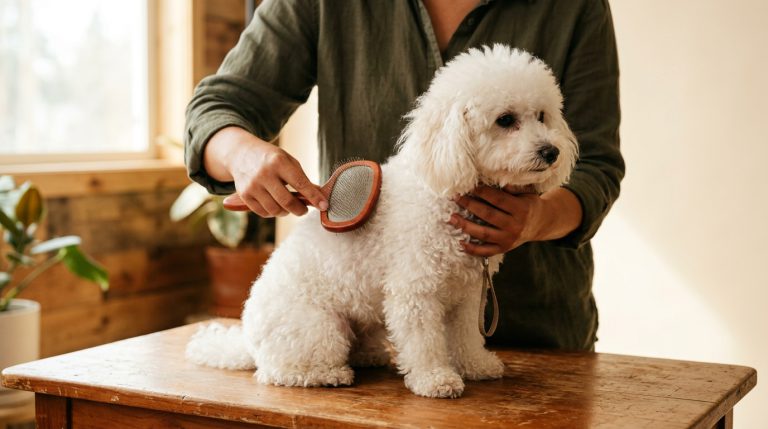
Why slicker brushes flatten curls — and what to use instead
Most off-the-shelf slickers have straight pins set at 90°. The angle grabs the curl shaft and pulls it open rather than following its spiral. Here’s the geometry that fixes it.
Between 6 and 14 months, most Poodles and Doodles trade their soft puppy fluff for adult curl. The transition window is narrow — and missing it is how most owners end up with a shaved dog they didn’t want.
Sulfate-free vs. clarifying: which does a Bichon actually need?
Bichon coat collects product residue faster than almost any other small breed. The answer isn’t one shampoo — it’s a rotation, and the clarifying step matters more than most grooming guides admit.
The Cobblestone Problem: harness fit on Porto’s streets
Uneven ground shifts a dog’s gait in ways flat pavement doesn’t. A harness that sits perfectly on a park path can chafe the axilla after forty minutes on stone. What to check before a long city walk.
Maltipoo coat types: what F1 vs. F1B actually means for grooming
Generation and backcross percentage change curl tightness, mat speed and how often the dog needs a bath. A Maltipoo owner and an F1B owner are solving different problems, even if the dogs look similar at first glance.
Five minutes before the bath: the pre-soak brush routine
Water swells the hair shaft and locks tangles in place. Spending five minutes with a wide-tooth comb before you turn on the tap is the difference between a clean dog and a matted one. The exact sequence, coat by coat.