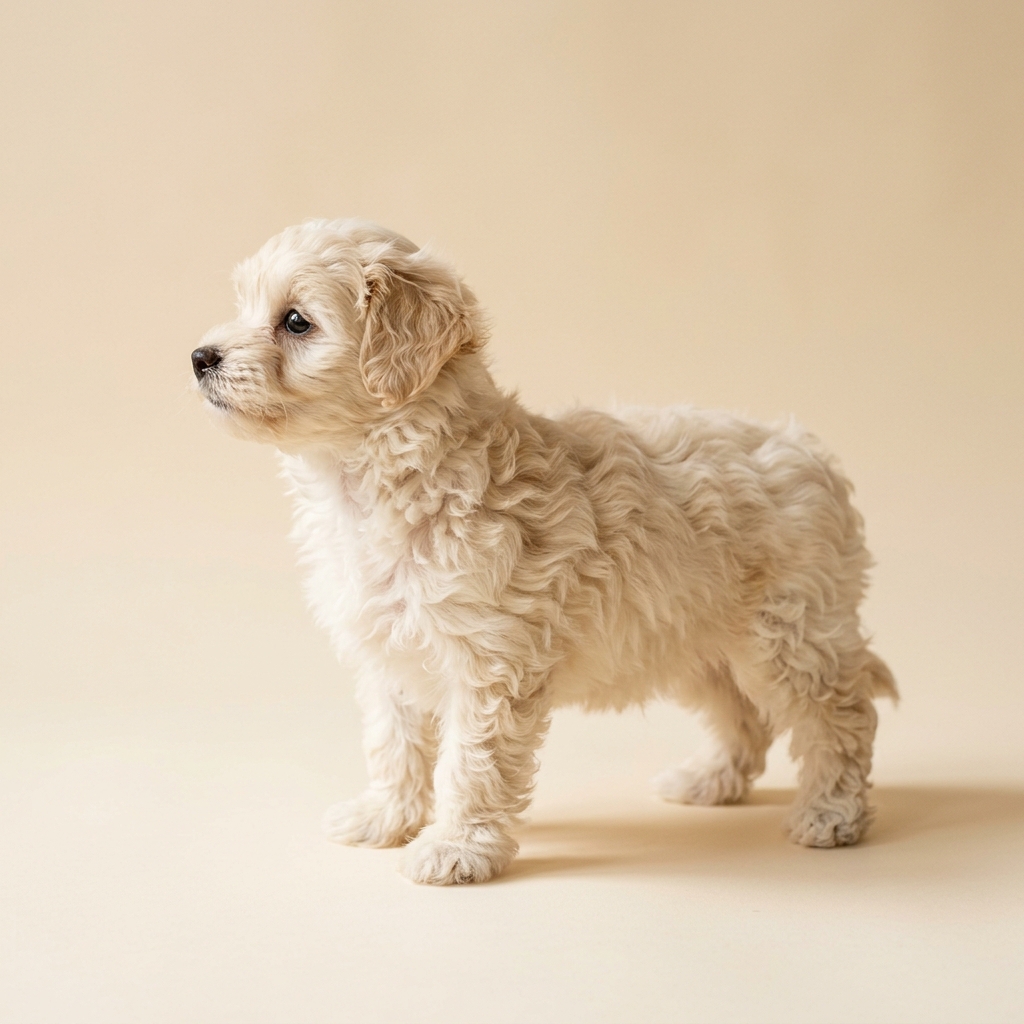
Generation and backcross percentage change curl tightness, mat speed and how often the dog needs a bath. A Maltipoo owner and an F1B owner are solving different problems, even if the dogs look similar at first glance.

Marta Reis
Marta has groomed small curly dogs in Porto for eleven years. She co-wrote the Curlpup Curl Care Guide and looks after four Toy Poodles of her own — one of whom objectively hates bath day.
More from the Journal
How often should a Cavapoo actually be bathed?
The "every 4–6 weeks" rule you’ll find everywhere was written for Labrador-density coats. Cavapoo curl porosity changes the equation — and bathing too often is the single most common reason coats start to mat faster, not slower.
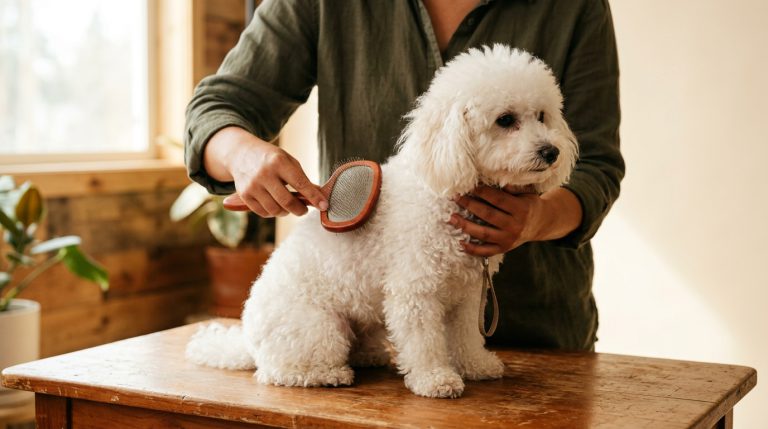
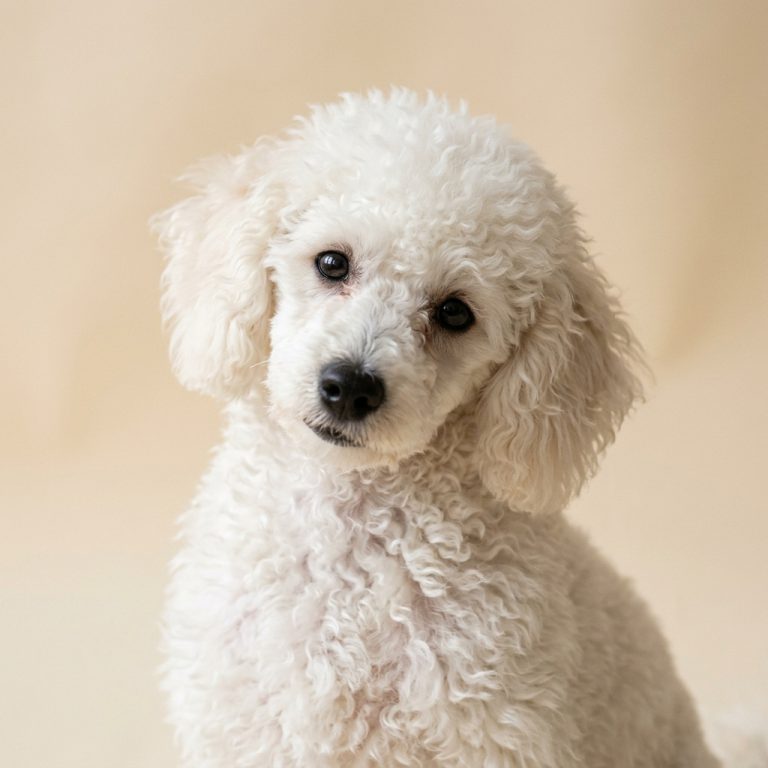
Reading your puppy’s first coat change
Between 6 and 14 months, most Poodles and Doodles trade their soft puppy fluff for adult curl. The transition window is narrow — and missing it is how most owners end up with a shaved dog they didn’t want.