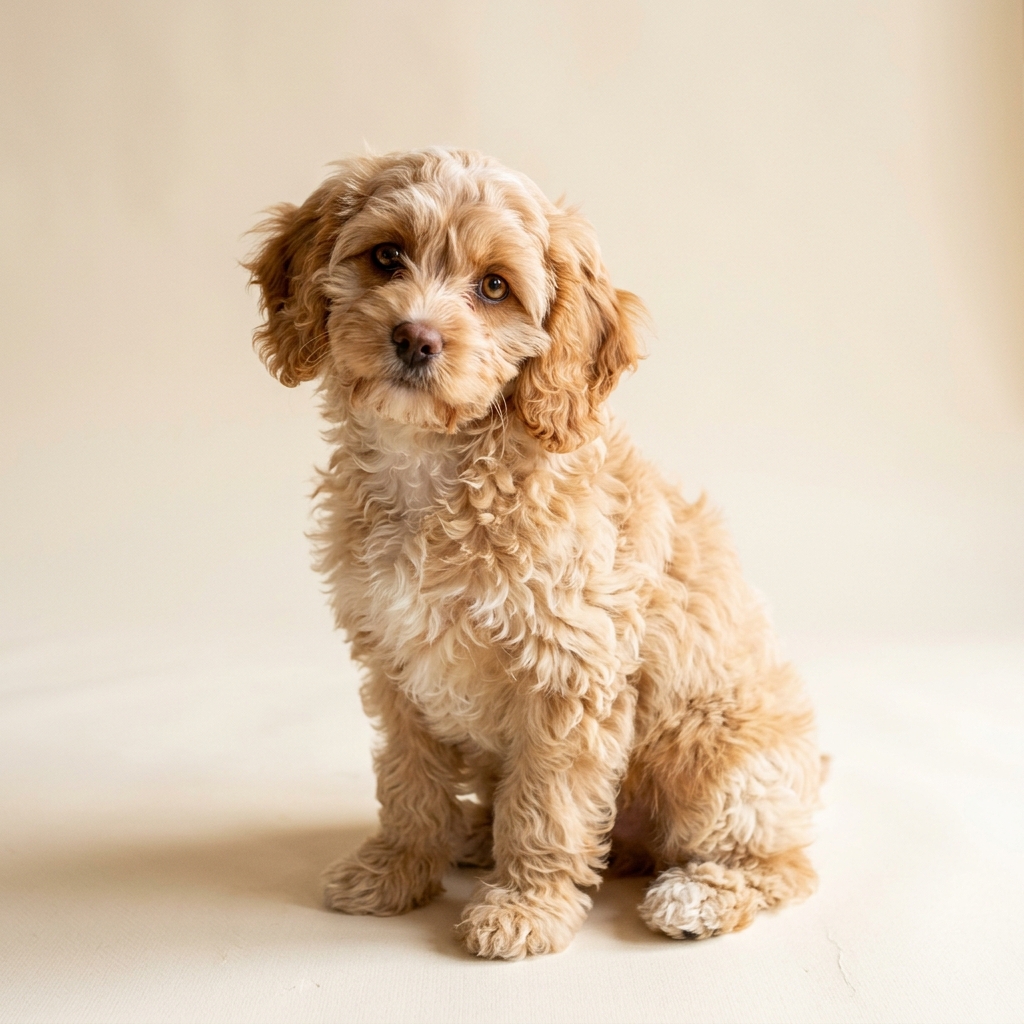
Every Cavapoo owner eventually types “how often bath” into a search engine at 11 pm while their dog smells faintly of canal. The answer you usually get is somewhere between “every two weeks” and “once a month”, which is not wrong, but it is almost useless — because the right interval depends on at least four things that vary dog by dog.
First: what kind of coat does your Cavapoo actually have?
The Cavapoo is a Cavalier King Charles Spaniel crossed with a Miniature or Toy Poodle, and the resulting coat sits on a spectrum. On one end you have the tight, low-shedding Poodle curl that repels surface dirt and dries slowly. On the other end you have the looser, silkier Cavalier wave that mats more easily and holds moisture close to the skin. Most dogs land somewhere in the middle — which is why your groomer’s answer about bathing frequency differs from your neighbour’s, even if they both have a “Cavapoo”.
The tighter the curl, the more naturally it sheds dirt. These dogs can generally go three to four weeks between baths without developing skin issues, provided you’re brushing out the roots regularly. The looser the wave, the more plant debris and Porto pavement grime will work its way into the undercoat — and two to three weeks becomes the practical ceiling before you start smelling the problem.
The season matters more than most guides admit
A Cavapoo walked three times a day through a dry Porto autumn is a different animal from the same dog in January, when the cobblestones stay damp until noon and every walk ends with muddy fringe. In dry periods, you can stretch a tight-curl Cavapoo to four weeks without issue. In a wet season — and this applies whether you’re in Edinburgh, Rotterdam or the Algarve — the practical maximum drops to two weeks, mostly because damp coat sitting against warm skin is a fast route to skin irritation.
What actually damages the coat: over-bathing or under-bathing?
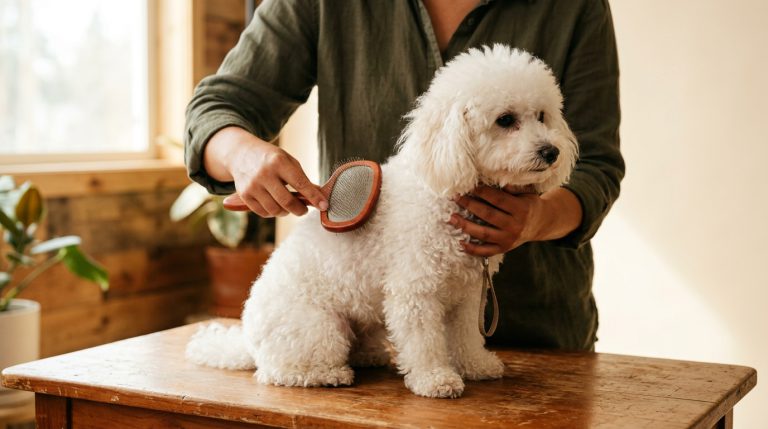
Both, in different ways. Under-bathing leads to sebum build-up around the hair follicles, which degrades the curl pattern over weeks and eventually causes sour smell, skin itch and increased mat formation. Over-bathing — say, every five to seven days with a standard detergent shampoo — strips the natural oils that keep the curl springy and causes the hair to become brittle and porous. A porous curl absorbs humidity, which turns into frizz.
The practical sweet spot for most Cavapoos in moderate climates:
- Tight curl (Poodle-dominant): every 3–4 weeks, with a rinse after muddy walks
- Loose wave (Cavalier-dominant): every 2–3 weeks through the year, every 10–14 days in winter
- Mixed coat (the majority): every 3 weeks, adjusted by smell and coat feel
“The best bathing schedule is the one your dog’s coat tells you it needs — not the one your calendar suggests. Brush the roots twice a week regardless, and the bath interval almost figures itself out.”
— Marta Reis, Curlpup Grooming Studio, Porto
A note on products and technique
The most common grooming mistake we see at the Porto studio is rinsing too fast. Shampoo residue on a curl coat is a mat machine — one session’s worth of incompletely rinsed product compresses the curl pattern and attracts every fleck of lint and debris on the next walk. Spend twice as long rinsing as you think necessary, especially around the neck and behind the ears where Cavapoos tend to run warmer. Use lukewarm water throughout; hot water opens the cuticle in a way that shows up as frizz six days later.
For product, you want a sulfate-free, low-glycerin formula at pH 6–7. Our Curl Definition Shampoo is formulated specifically for this range — it defines the wave without depositing silicone that dulls the coat over repeated applications. A light conditioner from mid-shaft to tip, not touching the roots, is all you need between baths to keep the curl bouncy.

2 Responses
This finally explains why our Cavapoo mats worse in winter even though we bath him more often. We’ve moved to every three weeks with a proper root brush twice a week and the difference after a month is obvious.
The rinsing point is the one nobody mentions. I was doing about half the rinse time I should have been. Coat feels completely different now — thank you for writing it down.